
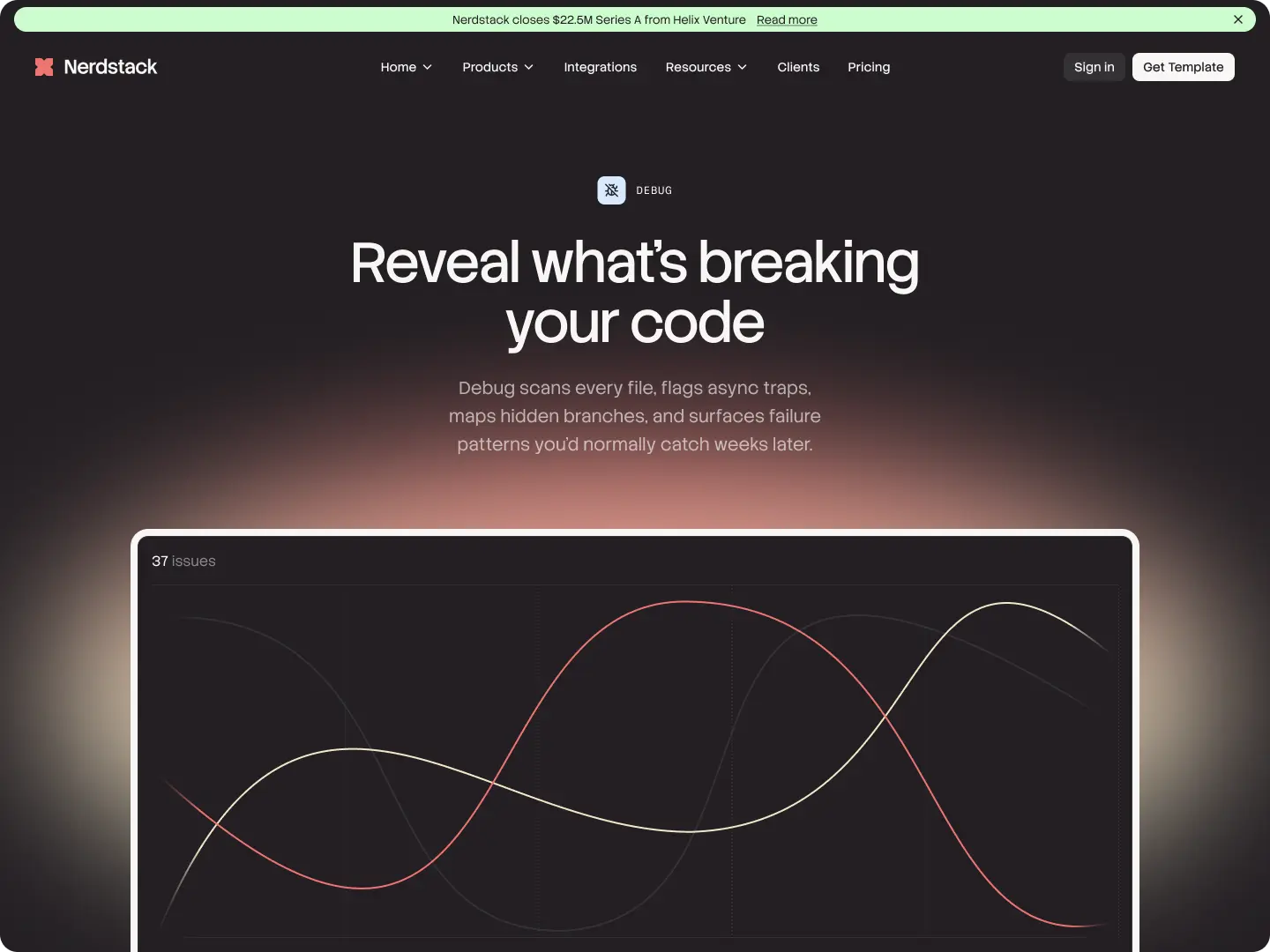








Reveal what’s breaking your code
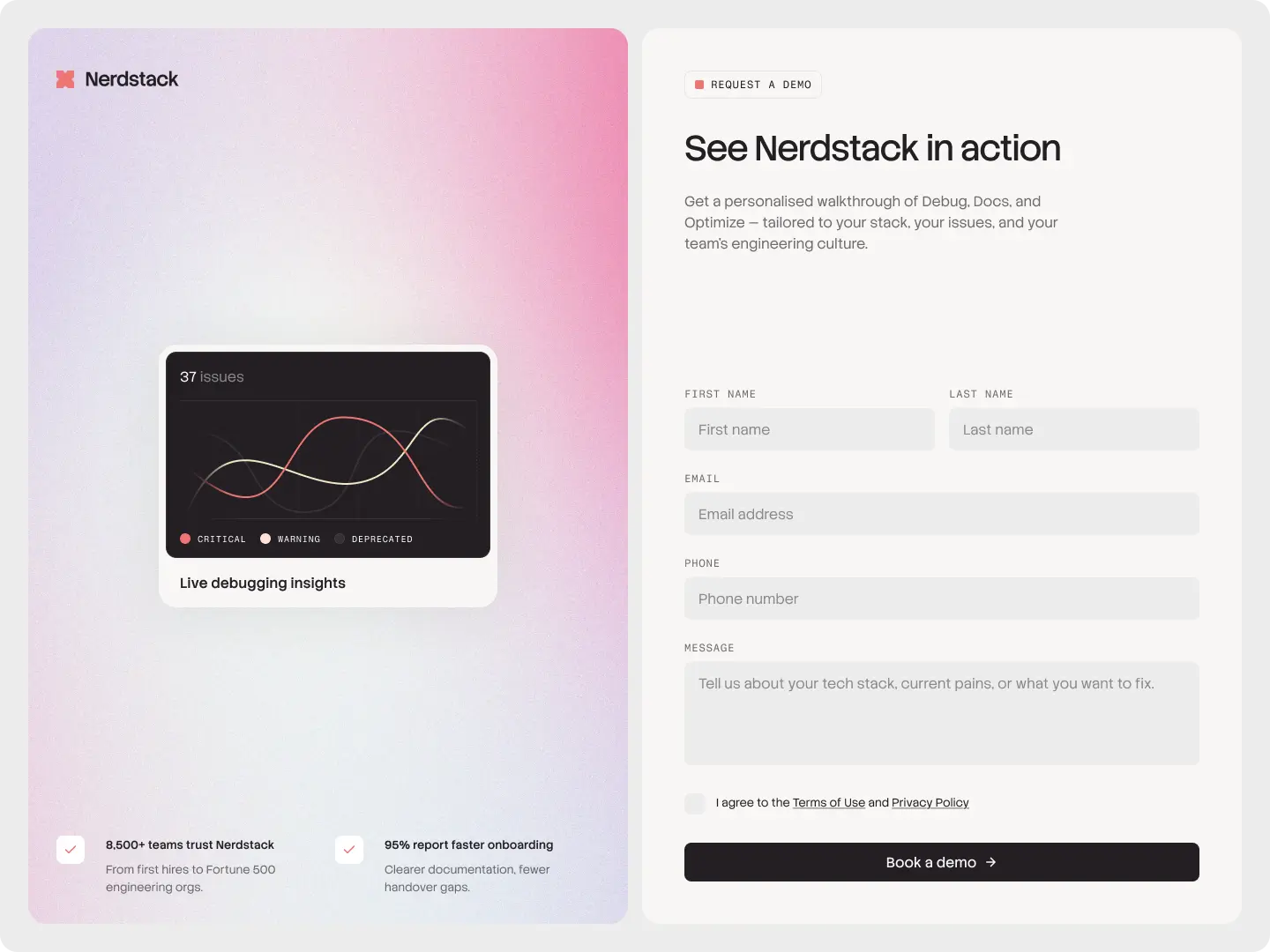
Debug scans every file, flags async traps, maps hidden branches, and surfaces failure patterns you’d normally catch weeks later.


Built from real engineering work, not theory
Instant clarity
Smarter debugging
Clean documentation
Better engineering decisions
Here’s a quick scroll through what we actually help with
Async Failures
State Drift
Logic Dead Zones
Faster onboarding
Async Failures
State Drift
Logic Dead Zones
Faster onboarding


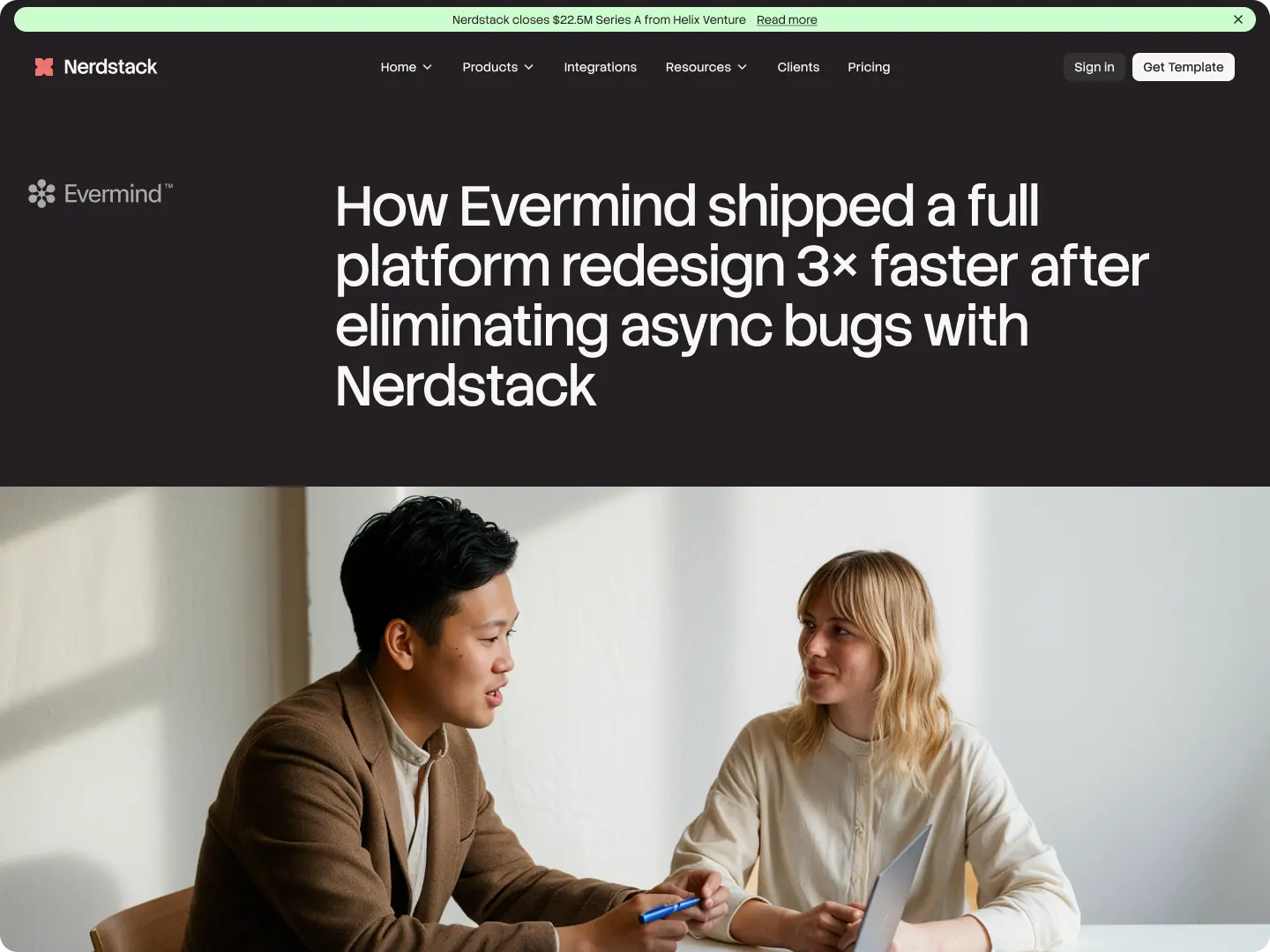
How Evermind shipped a full platform redesign 3× faster after eliminating async bugs with Nerdstack
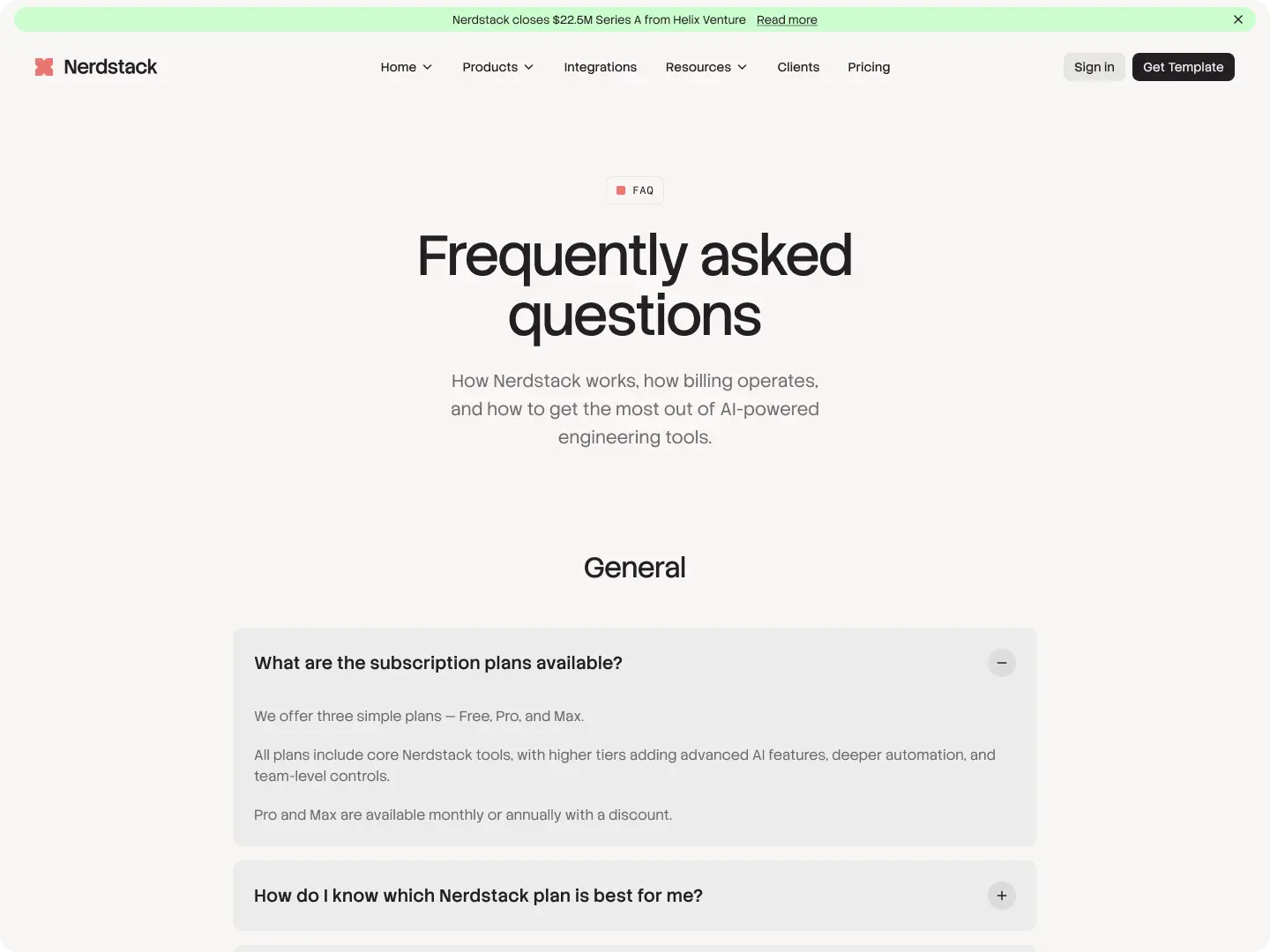
Questions?
We’re glad you asked.
It starts with a focused audit where we map your full content-to-lead-to-CRM pipeline and identify friction points. We prioritise high-ROI moves and turn them into short tactical sprints.
From there, we implement automations, connect systems, launch campaigns, and build dashboards inside your environment. Every few weeks we review performance, optimise what’s working, and remove what isn’t. It’s a continuous execution loop, not a one-off project.
We work with most modern B2B marketing and sales stacks. That includes CRMs like HubSpot and Salesforce, automation platforms such as Make, n8n, langgraph, outbound tools like Apollo and Instantly, SEO platforms like Surfer and analytics tools such as Looker Studio and Airtable, and collaboration tools including Notion and Slack.
If you’re using a different system, that’s not a blocker. Our approach is stack-agnostic. We design around your existing tools and connect them through APIs, webhooks, or custom workflows rather than forcing you into a new platform.
In most cases, no. We rationalise and optimise what you already have. Many teams don’t have a tool problem. They have a coordination problem.
We remove overlap, connect data flows properly, and ensure each tool has a defined role in the funnel. If a tool truly adds friction or cost without impact, we’ll recommend consolidation.
Results vary by baseline, but we typically focus on three measurable outcomes: increased qualified leads, improved lead-to-opportunity conversion, and reduced sales cycle time.In a recent engagement highlighted in the presentation Supernodes Automated Market Exe…, the client saw a 40% increase in qualified leads, a 20% lift in lead-to-opportunity conversion, and a 25% shorter sales cycle within three months. The common thread is tighter marketing-to-sales alignment and less manual execution bottleneck.
The initial audit is designed to surface quick wins within two weeks. These often include automating stalled email sequences, fixing lead routing delays, improving outbound targeting logic, or surfacing better insight for sales. Larger structural improvements compound over the following 60–90 days as systems stabilise and optimisation cycles kick in.
You receive a structured breakdown of where execution is slowing growth, a prioritised roadmap, and a small set of automation quick wins implemented or clearly defined. You leave with clarity on what to fix first, what to ignore, and how to scale output without increasing complexity.
We align on revenue-linked metrics from day one. That may include qualified pipeline generated, conversion rates between funnel stages, velocity through the sales cycle, cost per opportunity, or operational hours saved. Reporting is built directly into your dashboards so you always know what’s being done and why.